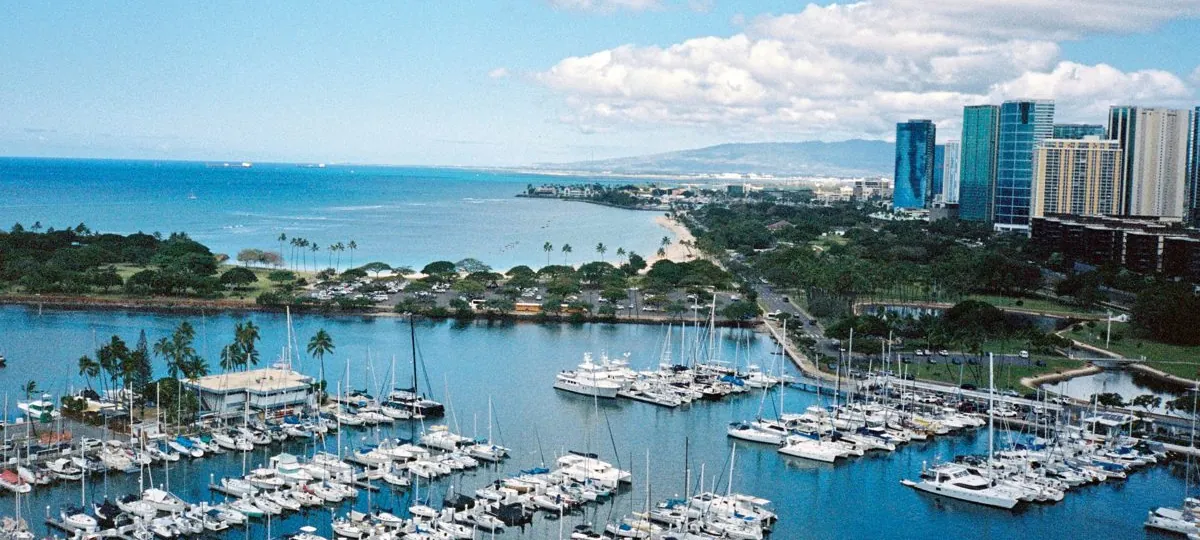
Selling a Documented Vessel in Hawaii
If your boat has a Certificate of Documentation and a name and hailport carved across the transom instead of HA numbers on the bow, you're selling into a federal system — not just a state one. It isn't harder. It's just different, and the sellers who get surprised by it are the ones whose deals stall two days before closing.
What "documented" actually changes
A U.S. Coast Guard documented vessel is registered federally through the National Vessel Documentation Center (NVDC) rather than numbered by the state. On Oahu that's most boats over roughly 40 feet, most cruising sailboats, and almost anything with a marine mortgage on it — lenders like documentation because a preferred ship mortgage can be recorded against the vessel at the federal level.
Three practical consequences when you sell:
- Documentation doesn't ride along with the boat. Your certificate effectively ends at the sale. The buyer files for a new one in their name — they aren't inheriting yours.
- Your ownership and debt history is a public record. Any buyer, lender or surveyor can order the vessel's abstract of title. Assume they will.
- Federal filings run on federal timelines. NVDC processing is not same-day. Build that into your closing expectations.
If you're still deciding which system your boat belongs in, start with Coast Guard documentation vs. Hawaii registration.
Pull your own abstract of title before you list
This is the single best thing a documented-boat seller on Oahu can do, and almost nobody does it.
An abstract of title is the NVDC's chronological record of the vessel: every recorded bill of sale, every mortgage, every lien, every satisfaction. It's what your buyer's lender will order, and it's where deals die. Common ugly surprises:
- A paid-off loan still showing as an open mortgage. Paying the balance doesn't clear the record — a satisfaction of mortgage has to be filed. If your lender never filed it, the boat still looks encumbered years later, and the buyer can't document it in their name.
- A break in the chain of ownership. A prior sale that was never properly recorded, a missing signature, a co-owner nobody remembered.
- An estate or trust in the chain that needs supporting documents you don't have on hand.
Find those in month one and they're paperwork. Find them during a buyer's ten-day contingency window and they're a dead deal. Same logic as checking a boat for liens — just from the seller's side of the table.
The paperwork chain at closing
1. The bill of sale
For a documented vessel, the Coast Guard's own bill of sale form (CG-1340) is the standard instrument, and the NVDC has specific expectations about how ownership is stated and how it's signed. Get it right the first time — a rejected filing means the buyer's certificate gets kicked back weeks later and the phone call comes to you. A plain handwritten bill of sale that would be fine for a 19-foot skiff is not the right document here. See boat bill of sale in Hawaii for the fundamentals.
2. Mortgage satisfaction, if applicable
Your lender files it, but you chase it. Ask for confirmation, in writing, that the satisfaction has actually been submitted to the NVDC — not just that the loan shows a zero balance.
3. The buyer's application
The buyer applies to the NVDC for a new Certificate of Documentation, typically on form CG-1258, with the bill of sale and the applicable fee. Forms, fees and processing times change; the NVDC publishes a current fee schedule, and both sides should check it rather than rely on a number someone quoted in a forum. If the buyer intends to finance, their lender will drive this process anyway.
4. The state side
Documented vessels and state-numbered vessels are handled differently in Hawaii, and harbor permits, mooring arrangements and any state requirements for a documented boat kept in Hawaii waters are their own conversation. Don't guess — call DOBOR at (808) 587-1970 and confirm what you and your buyer each need to do, and by when. See also boat registration and titling in Hawaii.
The hailport question
Your documented boat carries its name and hailport on the transom. If the buyer is renaming her or moving her to a new hailport, that's their filing to make after closing — but agree in writing who's responsible for the lettering and when it changes, especially if the boat stays in the same Oahu harbor. It's a small thing that turns into an argument surprisingly often.
What this means for pricing and buyers
Documented status is quietly a selling point. It signals a boat a lender was willing to secure, it makes financing easier for your buyer, and it opens you up to mainland and cruising buyers who expect documentation on a boat of that size. It also means your buyer pool skews more serious — and better funded. That's a good problem.
It also means presentation has to match. A 45-footer with a clean abstract, an organized service file and a current survey sells for real money on Oahu. The same boat with a mystery mortgage from 2011 sitting on the record gets picked apart. Start with pricing your boat to sell and prepping it properly.
Selling a documented boat on Oahu? Let's do it right.
We'll pull the abstract, flag anything sitting on the record, price it against real Oahu comps, and run the bill of sale, mortgage payoff and NVDC handoff so nothing stalls at the finish line. We pick up. We follow through.
Hawaii Yacht Group is Oahu's boat & yacht brokerage, based in Honolulu. Documented boat you're thinking about selling? Email contact@hawaiiyachtgroup.com. This article is general information only, not legal, tax, insurance or financial advice — federal forms, NVDC fees, state requirements and processing times change, so confirm current requirements with the NVDC and DOBOR and consult your own advisors before relying on anything here.